Against Christendom
What makes western civilization worth defending is liberalism not Constantine.

Last Saturday Secretary of State Marco Rubio spoke at the Munich Security Conference, a pow wow for western diplomats and national security leaders. In that speech he laid out a vision of America’s relationship to Europe and the basis for the much-battered-of-late Western alliance. He said:
We are part of one civilization -- Western civilization. We are bound to one another by the deepest bonds that nations could share, forged by centuries of shared history, Christian faith, culture, heritage, language, ancestry, and the sacrifices our forefathers made together for the common civilization to which we have fallen heir.
If I am understanding him correctly, the unity that Rubio sees between Europe and America lies in the fact that they are both part of a single civilization, what in times past was called Christendom.
I am opposed to Christendom.
Given that I believe that Jesus Christ was the son of God and the promised Messiah of all mankind, this might come as a surprise, but I am opposed to the idea of Christendom for three reasons. First, while I believe that there is something to Western civilization as a political project, I don’t think Christianity gets at the value of that project. Second, Christendom implies the cultural and political domination of Christianity. One can feel Rubio’s nostalgia for that domination, which is on clear display amongst post-liberal thinkers like Patrick Deneen and Adrian Vermeule. Such domination is not, I think, good for Christianity. Third, I have theological objections to Christendom, which I believe to be a perversion of the Gospel. For all of these reasons, Rubio’s veiled appeal to Christendom leaves me cold.
First, what makes Western civilization as a political project valuable is not Christianity but liberal democracy. There are lots of caveats here. Western countries have often honored liberal democracy in the breach at home and abroad. Furthermore, what I want to celebrate is a kind of low church liberalism that is comfortable with pluralism and strong communal identities. I don’t have a lot of patience with heroic visions of the autonomous self, and I don’t see the liberal project properly understood as a continuous battle to liberate individuals from every form of social or cultural restraint. Rather, the point of liberalism is to limit government power with individual rights, the rule of law, and periodic electoral accountability so that those with power cannot inflict misery on those who are weak and so individuals and communities can pursue their own visions of the good life without violent intervention from the state. Because I believe in low church liberalism, I think liberalism requires a certain kind of culture, and I think it is pretty clear that as a matter of historical fact liberalism owes much to basic moral intuitions that it inherited from Christianity. In other words, liberalism need not rest on the desiccated cosmopolitism that haunts the nightmares of post-liberals like Patrick Deneen or JD Vance. Still, what I want from my politics is liberalism not Christianity.
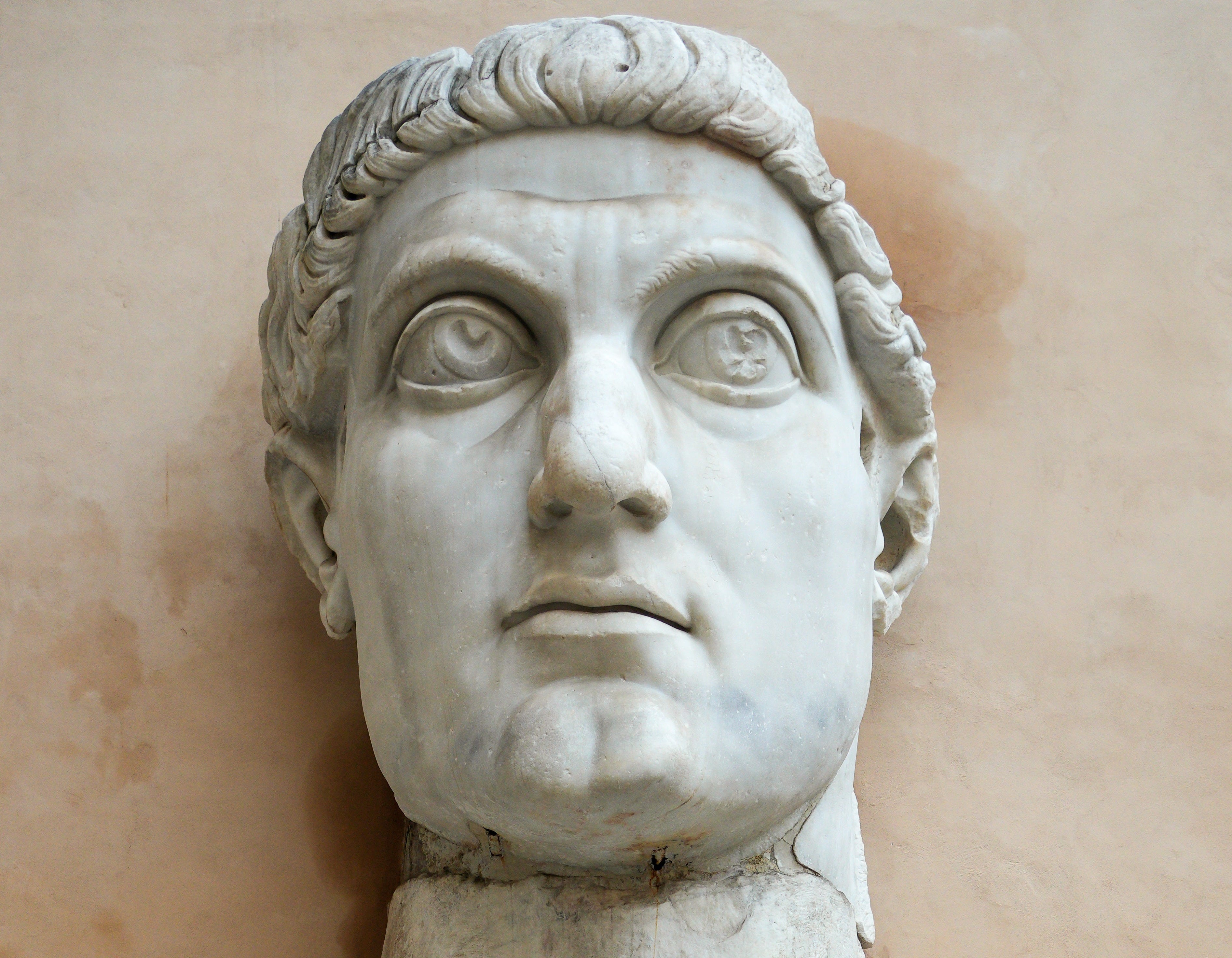
Second, I don’t think that Christendom is particularly good for Christianity. Jesus is not the founder Christendom, nor was it created by Peter, Paul, or even the early church fathers. Rather, Christendom was created by the Emperor Constantine. He was a Roman warlord adventurer who decided to wed Christianity to the state, largely because in an empire wobbling on the brink of civil war and catastrophe he wanted to co-opt the vitality of the new religion for political purposes. I confess that I don’t find the version of Christianity created by Constantine to be particularly inspiring. I don’t like religious orthodoxies chosen by political leaders for political purposes. I don’t like faith backstopped by the state. In the crudest terms, inquisitions, Puritans hanging Quakers, and the war of Christian princes for control of the church has been really bad for Christianity’s brand. Within the Western civilization that Rubio lauds, America has been more pious than Europe for a century or more. The religious vitality on this side of the Atlantic, however, is the gift of liberalism not Christendom. In the heartland of Christendom as imagined by Constantine and his successors, people don’t really go to church.
Finally, as you might have guessed from the preceding paragraph, I am also theologically opposed to the idea of Christendom. I think that Constantine’s vision of a Christian empire was a perversion of the Gospel. I think that the same is true of Victor Orban’s soft authoritarianism wedded to Christian symbolism and economic populism. Christ’s kingdom, he tells us, is not of this world. That doesn’t mean that Christianity has nothing to do with conditions in the world. We are all on the way to Jericho and we face the test of what to do when we see the man beaten on the side of the road. But Christian empire is not the answer that Jesus gave in his parable. In the most uncompromising and polemical version of the Restoration, Latter-day Saints are taught that the Christendom for which Rubio pines represented a Christian apostasy from the gospel, “having a form of godliness but denying the power thereof.” I confess that I think that Latter-day Saint attacks on the Christian tradition are often unfair and overdrawn. I read Thomas a Kempis devotionally, and I learn much about the gospel from the writings of Aquinas and Augustine. I am in favor of a humbler, more open, more generous version of Mormonism.
But, but, but…
I believe that there is an inescapable core of alienation from Christendom within Mormonism. It is not our project. It is not my project. I cannot help but note that according to the Roman Catholic Congregation for the Doctrine of the Faith, Mormonism doesn’t even qualify as a Christian heresy in the eyes of the Vatican. The baptisms of heretics are valid in canon law, but those of Latter-day Saints are not. I don’t begrudge the Vatican its conclusion. Latter-day Saints don’t acknowledge the validity of Catholic baptisms, and setting aside any theological complexities what’s good for the goose seems fair for the gander. Hence, I feel no sense of grievance at the Vatican’s conclusion. However, it illustrates an important reality: me and my people, the flawed and often confused Christian disciples with whom I worship each Sunday aren’t really part of Christendom.
I can’t be part of Christendom, but I can be a citizen of a free republic. To the extent that western civilization is a coalition of such republics, it is worth defending. As for Christendom, Marco Rubio and the post-liberals are welcome to pine for it.
But I want nothing to do with it.
As an Orthodox Christian, I share all these views and note this: No Orthodox Church could exist in the Americas *except for* our liberal democracy that pointedly rejects the idea of "Christendom."
We would have been slaughtered, and those doing the slaughtering would have been taught they had done God's holy will.
As was true in Europe prior to the American Experiment. As is true today in Ukraine, where the Patriarch of Russia himself has blessed the murder of Ukrainian Orthodox Christians in the name of "Russkiy Mir."
What Rubio and his ilk want, and what all decent humans should oppose with every fibre of our being, is a rejection of tolerance and a return to domination by force of all who think or believe differently.
I agree with Peter Wilson. I don’t know how much you have kept abreast of the conversation around Tom Holland the last few years, but he has so utterly reframed the argument you’re currently making that it seems crazy for you not to at least nod dismissively in his direction.
In a nutshell, as Peter says, you’re still talking about Christianity and liberal democracy as two separate things, the way people did ten years ago, when Holland has argued fairly persuasively that liberal democracy is a product of Christianity. Even more, it’s a kind of appendage of Christianity. In some cases, it’s actually an aspect of Christendom that has been imposed by force on non-Christian peoples, whether they wanted it or not. (e.g., Muslims, who have no Christian tradition of the saeculum and religio, can feel their religion is under attack when they are forced by Western Christians to separate the secular and the religious.
What’s more (and I’m still parroting Holland here) Christianity, by is nature, undermines the very power structures that seek to use it as the source of their power. There’s just always going to be a very uneasy relationship between a faith of “the first shall be last, and the last shall be first” and “the weak shall inherit the Earth” and power structures attempting to make that faith the basis and justification of their power.
Thus we see Christian soldiers conquering under Christian banners only to see, over time, Christianity itself undermining and altering the very hegemony they seek to impose. Your article seems to be taking those soldiers at face value, and in a short view you’re correct, but we see at the same time that the magic of Christianity, in the long view, is its refusal to be used in that way.